
Age assurance is why Reinhart has to bring this “No Parking” logo back on.
The pre-2021 Reinhart logo was a symbol of defiance. It was supposed to be an uppercase R overlaid on top of a "No Parking" sign. It was really meant to signal his position against common misconseptions around children and IT. And one of them is indeed, around COPPA and age assurance.

That was the last version of the original symbol was introduced in 2016, then briefly taken down in response to United States' formal legislation of LGBT rights.
In 2019, the logo itself was modernized to look like this, and it's the design style I would probably choose to remake this logo in 2026:

And today, we are still dealing with age assurance or age verification problems in digital ecosystems. No, not just around the social media ban for under-16s or smartphone ban for school students.
But states and countries have authorized new laws that literally require you to verify your driver's license or passport in order to log in to your laptop or connect to any Wi-Fi network connected to the internet. Yes, literally.
Despite it's easy to make accusations against certain groups like, the Labour Party of UK, the Federal Senate of Brazil, or the Democratic Party of the US, acknowledging the root causes that justify this legal mandate is the problem I personally would prefer to solve as both a former children and a future parent, instead of effectively require parents and schools to gatekeep the access and control of technology.
Because, I strongly believe that early immersion of digital technologies is the key behind my success, and others too. Please read what others' are thinking on this policy from the perspectives of the CEO of System76 (blog.system76.com):
Most System76 employees installed operating systems and created accounts on their computer when they were under 18. They did this out of curiosity. Many started writing software. Some were already writing operating systems. I’m sure the story is similar at most tech companies. Limiting a child’s ability to explore what they can do with a computer limits their future. Removing user limitations to the computer (proprietary software, locked-down platforms like Android and iOS) is why System76 exists.[1]
I have started my computer journey since 8 years old, bypassed COPPA measures to get an e-mail account at 11,[note:1] and today, at 24, I have shared significant insights and contributed for everyone from families and friends, to Open Source communities, to university student organizations, to tech start-ups, up to Indonesian government officials.
That means, if today's digital age restrictions were put in place at the late 2000s, Reinhart will effectively lose a lifetime potential of learning and growing with digital technologies that made myself Reinhart today. Even if that's just 10 years waiting to log in by "start a new sport, learn a new instrument or read that book that's been sitting there on your shelf for some time".[note:2][2]
[note:1] COPPA stands for Children's Online Privacy Protection Act that is enforced in the United States and have undergone several revisions. Meanwhile, Reinhart was asked to create an e-mail account as part of his sch
[note:2] Quotes attributable to Australian Prime Minister Anthony Albanese, on his remarks of the effect of the Australian under-16s social media ban.[2]
The root causes.
Now, I'd like to give some crash course on why we see these bans are taking into effect. As I am currently busy with my uni assignments, I may not be able to put much references on this post—please research the Web yourself before it is effectively banned for under-18s.
1. Governments and politicians no longer want to recognize Information Technology as an art.
Which is ironic as the word technology is derived from the Greek word tekhne, which literally, means art!
Instead of treating the digital platform, operating system, social media, or video games as an "art", they are currently under full motion to make Information Technology as an arbitrary tool or utility to support a piece of work or order.
We can see the case of Pathways,[3] a UK government-developed piece of software marketed as a "video game" to help its audience navigate against "online hateful and offensive behavior", which is clearly, more respected as a utility rather than art. Other video games, like Minecraft and Undertale present some form of art that countless people appreciate.
Pathways decided to pursue the notion that "the cause is more important than the expression", that the end-goal of the game is to expose audience to UK police and defence authorities whose are responsible to define which is hateful or not, as well as what to do to mitigate citizens from types of content or discussion they identified as dangerous to the nation.[4]
Similar case also happened to another game, Relooted, where independent game journalists found out the game development is heavily tied to the French government's "African restitution initiative", with the primary goal of apologizing to African nations for stealing their stuff to be put in the French soil for so long. Again, Relooted was primarily promoted not for its art—which is a mix of cyberpunk and African cultures—but for its cause of African restitution.[5]
We see the same case with the Indonesian government's recent approach with Digital Talent Scholarship (also known as DTS or "Digitalent")—a Ministry-led initiative to guide current and future generations to use these technologies.[6] Due to high industrial expectations, you will see most of its offered courses to the public, students, and government officials put the primary notion that "certain technology exist as a tool", including:
- A tool called Generative AI that will help you market your business,
- A tool called the "super app" that lets you book taxi, recharge your mobile credit, order food and groceries, while watching subscribed movies on one single app,
- A tool that is built-in on Wi-Fi routers to manage how devices can connect to the internet,
- A tool to show how well does your website is ranked in search engine results,
- A tool to make funny videos that will engage well over TikTok,
- A tool to help secure your access to the eGovernment portal, such as multi-factor authenticator,
I would say that the art is lost. Because on the other parts of the information and communication technology enthusiasts, people appreciate ICT as an art that made this infamous WordPress phrase: code is poetry. Some facets of the hacker culture include the perception that IT and computers are pieces of art we could tinker on.
And of course, can you spell the name Reinhart without art? (#- )"
2. Governments want to restore the ARPANET-era of obedience, submission, and control in the age of the Internet.
Art is also probably lost because of politics and for the interest of politics. Or nationalism. Or just pure patriotism.
Here, I want to assure everyone that I acknowledge the existence, intent, and legacy of ARPANET that defined the foundations of today's Internet. Note that this ARPANET topic is being actively silences, removed, or replaced by EFF, Mozilla, and other "internet activist" organizations, into an alternative narrative as if the Internet was destined for public good (as in liberalism and libertarianism).
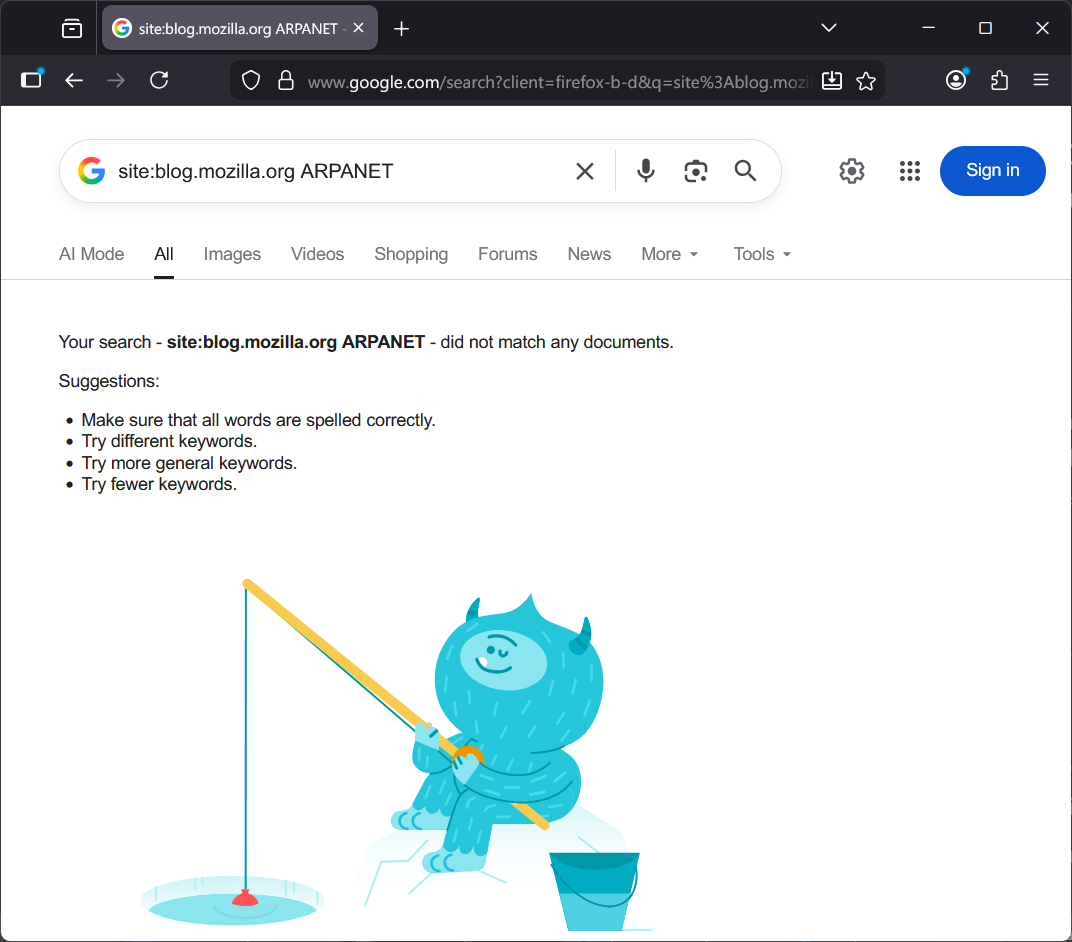
Note that yes, ARPANET is mentioned on MDN Web Docs, but only as a historical artefact of computer network that precedes the Internet. It does not highlight ARPANET's original vision and mission, and its assocciatioon with military values.
The distiction between ARPANET and today's Internet leads a very interesting concern on digital ethics. Because,
- Back then, to use the ARPANET, you have to be sworn under the United States military code. Today, you could probably buy some coffee on Starbucks to get free Wi-Fi.
- Before, ARPANET users cannot use the network for personal gain; they can only use it for the interest and accomplishments of their work in the US Department of Defence. Today, in Indonesia, people over X/Twitter and Threads are making viral posts just to be able to slip some Shopee affiliate links. Instagram influencers are now blurring their lines between confession and brand endorsements, making their whole life a product of those sponsored brands.
- When ARPANET has just evolved into the early Internet, there was the "netiquette"—a shared code of conduct ratified into universities, companies, and government departments that guide how the discussions of the Internet should have been. Today's age of skibidi toilet effectively destroyed the norms set in the past.
So to a certain extent, I can understand why some governments want to ban underaged children because the conversations that no longer applies to the "netiquette", aka. the Internet standard RFC 1855 (rfc-editor.org). RFC 1855 includes rules that even Millenials and (#- )s and AdSense-hungry content creators would not likely to obey. Freedom rulez, b*tch!
References
- [1] "System76 on Age Verification Laws" - System76 {Carl Ritchell}. https://blog.system76.com/post/system76-on-age-verification (2026-03-05).
- [2] "Anthony Albanese urges teens to read a book, learn an instrument ahead of social media ban" - News.com.au {Nathan Schmidt}. https://www.news.com.au/technology/online/social/anthony-albanese-urges-teens-to-read-a-book-learn-an-instrument-ahead-of-social-media-ban/news-story/dde6fa8d284912114c0a3da1f834c45e (2025-12-09).
- [3] "Pathways - Navigating Gaming, The Internet & Extremism" - Shout Out UK. https://www.shoutoutuk.org/pathways/ (n.d, accessed 2026-03-15).
- [4] "Amelia, a game character, becomes a meme with an extremist agenda" - Cybernews {Konstancija Gasaitytė}. https://cybernews.com/ai-news/amelia-extremist-agenda-character/ (2026-01-26, updated 2026-02-03).
- [5] "Relooted Was Hiding Something MUCH Bigger!" - Gothic Therapy. https://www.youtube.com/watch?v=c9OAE12SXNo (2026-02-24). YouTube Video.
- [6] "Digital Talent Scholarship" - Kementerian Informasi dan Digital RI. https://digitalent.komdigi.go.id (n.d, accessed 2026-03-15).